Showing posts with label Lydia Davis. Show all posts

Sunday, December 4, 2022

Author: Lydia Davis


Lydia Davis is an American short story writer, novelist, essayist, and translator from French and other languages, who often writes short short stories. Davis has produced several new translations of French literary classics, including Swann’s Way by Marcel Proust and Madame Bovary by Gustave Flaubert.

Bio:

https://en.wikipedia.org/wiki/Lydia_Davis

Wednesday, March 26, 2014

New Stuff: Lydia Davis


Lydia Davis is a great master of very short literature and one of my alltime favourite authors.

Saturday, February 8, 2014

Friday, February 5, 2010

Sunday, January 17, 2010

Lydia Davis: A Strange Impulse


A Strange Impulse

I looked down on the street from my window. The sun shone and the shopkeepers had come out to stand in the warmth and watch the people go by. But why were the shopkeepers covering their ears? And why were the people in the street running as if pursued by a terrible specter? Soon everything returned to normal: the incident had benn no more than a moment of madness during which the people could not bear the frustration of their lives and had given way to a strange impulse.

Saturday, January 16, 2010

Lydia Davis: Suddenly Afraid


Suddenly Afraid

because she couldn't write the name of what she was: a wa wam owm owamn womn

Friday, January 8, 2010

Lydia Davis: Getting Better


(art: Fred Barnard)

Getting Better

I slapped him again because when I was carrying him in my arms he tore my glasses off and hurled them at the grate in the hall. But he wouldn't have done it if I hadn't been so angry already. After that I put him to bed.
Downstairs, I sat on the sofa eating and reading a mgazine. I fell asleep there for an hour. I woke up with crumbs on my chest. When I went into the bathroom, I could not look at myself in the mirror. I did the dishes and sat down again in the living room. Before I went to bed I told myself things were getting better. It was true: this day had been better than the day before, and the day before had been better than most of last week, though not much better.

Sunday, January 3, 2010

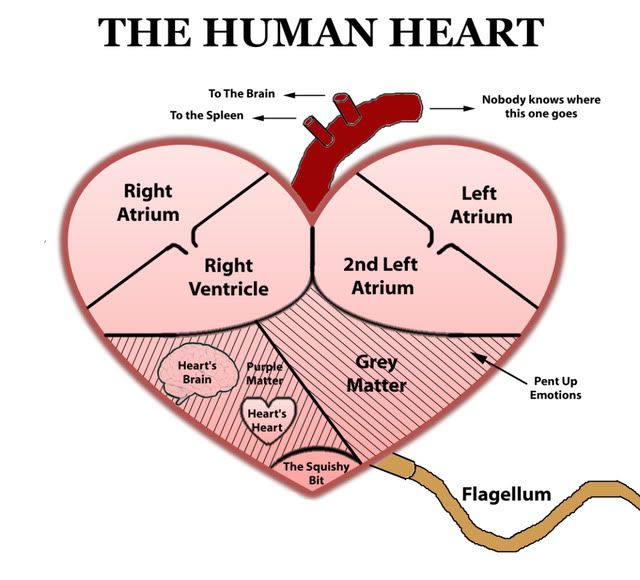
Lydia Davis: Head, Heart


Head, Heart

Heart weeps.
Head tries to help heart.
Head tells heart how it is, again:
You will lose the ones you love. They will all go. But even the earth will go, someday.
Heart feels better, then.
But the words of head do not remain long in the ears of heart.
Heart is so new to this.
I want them back, says heart.
Head is all that heart has.
Help, head. Help heart.

Thursday, December 10, 2009

Lydia Davis: Order


(ph: Walter Sanders)

Order

All day long the old woman struggles with her house and the objects in it: the doors will not shut; the floorboards separate and the clay squeezes up between them; the plaster walls dampen with rain; bats fly down from the attic and invade her wardrobe; mice make nests in her shoes; her fragile dresses fall into tatters from their own weight on the hanger; she finds dead insects everywhere. In desperation she exhausts herself sweeping, dusting, mending, caulking, gluing, and at night sinks into bed holding her hands over her ears so as not to hear the house continue to subside into ruin around her.

Tuesday, December 8, 2009

Lydia Davis: Lonely


Lonely

No one is calling me. I can’t check the answering machine because I have been here all this time. If I go out, someone may call while I’m out. Then I can check the answering machine when I come back in.

Friday, November 27, 2009

Lydia Davis: Almost Over: What's the Word?


(art: Heather Nevay)

Almost Over: What's the Word?

He says,
"When I first met you
I didn't think you would turn out to be so
...strange."

Lydia Davis: A Different Man


A Different Man

At night he was a different man. If she knew him as he was in the morning, at night she hardly recognized him: a pale man, a man in a broken sweater, a man with dark eyes who kept his distance from her, who took offense, who was not reasonable. In the morning, he was a rosy king, gleaming, smooth-cheeked and smooth-chinned, fragrant with perfumed talc, coming out into the sunlight with a wide embrace in his royal red plaid robe...

Wednesday, November 25, 2009

Lydia Davis: Happiest Moment


(ph: Dave Beckerman)

Happiest Moment

If you ask her what is a favorite story she has written, she will hesitate for a long time and then say it may be this story that she read in a book once: an English language teacher in China asked his Chinese student to say what was the happiest moment in his life. The student hesitated for a long time. At last he smiled with embarrassment and said that his wife had once gone to Beijing and eaten duck there, and she often told him about it, and he would have to say the happiest moment of his life was her trip, and the eating of the duck.

Tuesday, November 24, 2009

Lydia Davis: Interesting


INTERESTING

My friend is interesting but he is not in his apartment.

Their conversation appears interesting but they are speaking a language I do not understand.

They are both reputed to be interesting people and so I'm sure their conversation is interesting, but they are speaking a language I understand only a little, so I catch only fragments such as "I see" and "on Sunday" and "unfortunately."

This man has a good understanding of his subject and says many things about it that are probably interesting in themselves, but I am not interested because the subject does not interest me.

Here is a woman I know coming up to me. She is very excited, but she is not an interesting woman. What excites her will not be interesting, it will simply not be interesting.

At a party, a highly nervous man talking fast says many smart things about subjects that do not particularly interest me, such as the restoration of historic houses and in particular the age of wallpaper. Yet, because he is so smart and because he gives me so much information per minute, I do not get tired of listening to him.

Here is a very handsome English traffic engineer. The fact that he is so handsome, and so animated, and has such a fine English accent makes it appear, each time he begins to speak, that he is about to say something interesting, but he is never interesting, and he is saying something, yet again, about traffic patterns.

Monday, November 23, 2009

Lydia Davis: Boring Friends


BORING FRIENDS

We know only four boring people. The rest of our friends we find very interesting. However, most of the friends we find interesting find us boring: the most interesting find us the most boring. The few who are somewhere in the middle, with whom there is reciprocal interest, we distrust: at any moment, we feel, they may become too interesting for us, or we too interesting for them.

Sunday, November 22, 2009

Lydia Davis: What I Feel


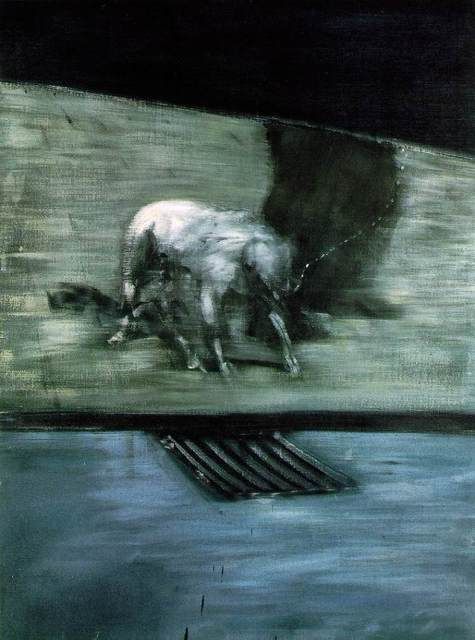
(art: Francis Bacon)

WHAT I FEEL

These days I try to tell myself that what I feel is not very important. I've read this in several books now: that what I feel is important but not the center of everything. Maybe I do believe this, but not enough to act on it. I would like to believe it more deeply.
What a relief that would be. I wouldn't have to think about what I felt all the time, and try to control it, with all its complications and all its consequences. I wouldn't have to try to feel better all the time. In fact, if I didn't believe what I felt was so important, I probably wouldn't even feel so bad, and it wouldn't be so hard to feel better. I wouldn't have to say, Oh I feel so awful, this is like the end for me here, in this dark living-room late at night, with the dark street outside under the streetlamps, I am so very alone, everyone else in the house asleep, there is no comfort anywhere, just me alone down here, I will never calm myself enough to sleep, never sleep, never be able to go on to the next day, I can't possibly go on, I can't live, even through the next minute.
If I didn't believe what I felt was the center of everything, then it wouldn't be the center of everything, but just something off to the side, one of many things, and I would be able to see and pay attention to those other things that are equally important, and in this way I would have some relief.
But it is curious how you can believe an idea is absolutely true and correct and yet not believe it deeply enough to act on it. So I still act as though my feelings were the center of everything, and they still cause me to end up alone by the living-room window late at night. What is different now is that I have this idea: I have the idea that soon I will no longer believe that my feelings are the center of everything. This is a comfort to me, because if you despair of going on, but at the same time tell yourself that what you feel may not be very important, then either you may no longer despair of going on, or you may still despair of going on but not quite believe it anymore.

Friday, November 20, 2009

Lydia Davis: Trying to Learn


TRYING TO LEARN

I am trying to learn that this playful man who teases me is the same as that serious man talking money to me so seriously he does not even see me anymore and that patient man offering me advice in times of trouble and that angry man slamming the door as he leaves the house. I have often wanted the playful man to be more serious, and the serious man to be less serious, and the patient man to be more playful. As for the angry man, he is a stranger to me and I do not feel it is wrong to hate him. Now I am learning that if I say bitter words to the angry man as he leaves the house, I am at the same time wounding the others, the ones I do not want to wound, the playful man teasing, the serious man talking money, and the patient man offering advice. Yet I look at the patient man, for instance, whom I would want above all to protect from such bitter words as mine, and though I tell myself he is the same man as the others, I can only believe I said those words, not to him, but to another, my enemy, who deserved all my anger.

Lydia Davis: The Actors


THE ACTORS

IN OUR TOWN there is an actor, H. -- a tall, bold, feverish sort of man -- who easily fills the theater when he plays Othello, and about whom the women here become very excited. He is handsome enough compared to the other men, though his nose is somewhat thick and his torso rather short for his height. His acting is stiff and inflexible, his gestures obviously memorized and mechanical, and yet his voice is strong enough to make one forget all that. On the nights when he is unable to leave his bed because of illness or intoxication -- and this happens more often than one would imagine -- the part is taken by J., his understudy. Now J. is pale and small, completely unsuitable for the part of the Moor; his legs tremble as he comes on stage and faces the many empty seats. His voice hardly carries beyond the first few rows, and his small hands flap uselessly in the smoky air. We feel only pity and irritation as we watch him, and yet by the end of the play we find ourselves unaccountably moved, as though he had managed to convey something timid or sad in Othello's nature. But the mannerisms and skill of H. and J. -- which we analyze minutely when we visit together in the afternoons and continue to contemplate even once we are alone after dinner -- seem suddenly insignificant when the great Sparr comes down from the city and gives us a real performance of Othello. Then we are so carried away, so exhausted with emotion, that it is impossible to speak of what we feel. We are almost grateful when he is gone and we are left with H. and J., imperfect as they are, for they are familiar to us and comfortable, like our own people.