
The Mouse
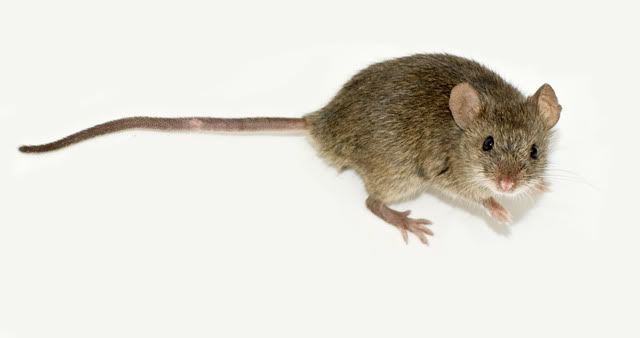
THEODORIC VOLER HAD been brought up, from infancy to the confines of middle age, by a fond mother whose chief solicitude had been to keep him screened from what she called the coarser realities of life. When she died she left Theodoric alone in a world that was as real as ever, and a good deal coarser than he considered it had any need to be. To a man of his temperament and upbringing even a simple railway journey was crammed with petty annoyances and minor discords, and as he settled himself down in a second-class compartment one September morning he was conscious of ruffled feelings and general mental discomposure. He had been staying at a country vicarage, the inmates of which had been certainly neither brutal nor bacchanalian, but their supervision of the domestic establishment had been of that lax order which invites disaster. The pony carriage that was to take him to the station had never been properly ordered, and when the moment for his departure drew near, the handyman who should have produced the required article was nowhere to be found. In this emergency Theodoric, to his mute but very intense disgust, found himself obliged to collaborate with the vicar's daughter in the task of harnessing the pony, which necessitated groping about in an ill-lighted outbuilding called a stable, and melling very like one--except in patches where it smelled of mice. Without being actually afraid of mice, Theodoric classed them among the coarser incidents of life, and considered that Providence, with a little exercise of moral courage, might long ago have recognized that they were not indispensable, and have withdrawn them from circulation. As the train glided out of the station Theodoric's nervous imagination accused himself of exhaling a weak odor of stable yard, and possibly of displaying a moldy straw or two on his unusually well-brushed garments. Fortunately the only other occupation of the compartment, a lady of about the same age as himself, seemed inclined for slumber rather than scrutiny; the train was not due to stop till the terminus was reached, in about an hour's time, and the carriage was of the old-fashioned sort that held no communication with a corridor, therefore no further traveling companions were likely to intrude on Theodoric's semiprivacy. And yet the train had scarcely attained its normal speed before he became reluctantly but vividly aware that he was not alone with the slumbering lady; he was not even alone in his own clothes. A warm, creeping movement over his flesh betrayed the unwelcome and highly resented presence, unseen but poignant, of a strayed mouse, that had evidently dashed into its present retreat during the episode of the pony harnessing. Furtive stamps and shakes and wildly directed pinches failed to dislodge the intruder, whose motto, indeed, seemed to be Excelsior; and the lawful occupant of the clothes lay back against the cushions and endeavored rapidly to evolve some means for putting an end to the dual ownership. It was unthinkable that he should continue for the space of a whole hour in the horrible position of a Rowton House for vagrant mice (already his imagination had at least doubled the numbers of the alien invasion). On the other hand, nothing less drastic than partial disrobing would ease him of his tormentor, and to undress in the presence of a lady, even for so laudable a purpose, was an idea that made his ear tips tingle in a blush of abject shame. He had never been able to bring himself even to the mild exposure of openwork socks in the presence of the fair sex. And yet--the lady in this case was to all appearances soundly and securely asleep; the mouse, on the other hand, seemed to be trying to crowd a wanderjahr into a few strenuous minutes. If there is any truth in the theory of transmigration, this particular mouse must certainly have been in a former state a member of the Alpine Club. Sometimes in its eagerness it lost its footing and slipped for half an inch or so; and then, in fright, or more probably temper, it bit. Theodoric was goaded into the most audacious undertaking of his life. Crimsoning to the hue of a beetroot and keeping an agonized watch on his slumbering fellow traveler, he swiftly and noiselessly secured the ends of his railway rug to the racks on either side of the carriage, so that a substantial curtain hung athwart the compartment. In the narrow dressing room that he had thus improvised he proceeded with violent haste to extricate himself partially and the mouse entirely from the surrounding casings of tweed and half-wool. As the unraveled mouse gave a wild leap to the floor, the rug, slipping its fastening at either end, also came down with a heart-curdling flop, and almost simultaneously the awakened sleeper opened her eyes. With a movement almost quicker than the mouse's, Theodoric pounced on the rug and hauled its ample folds chin-high over his dismantled person as he collapsed into the farther corner of the carriage. The blood raced and beat in the veins of his neck and forehead, while he waited dumbly for the communication cord to be pulled. The lady, however, contented herself with a silent stare at her strangely muffled companion. How much had she seen, Theodoric queried to himself; and in any case what on earth must she think of his present posture?
"I think I have caught a chill," he ventured desperately.
"Really, I'm sorry," she replied. "I was just going to ask you if you would open this window."
"I fancy it's malaria," he added, his teeth chattering slightly, as much from fright as from a desire to support his theory.
"I've got some brandy in my holdall, if you'll kindly reach it down for me," said his companion.
"Not for worlds--I mean, I never take anything for it," he assured her earnestly.
"I suppose you caught it in the tropics?"
Theodoric, whose acquaintance with the tropics was limited to an annual present of a chest of tea from an uncle in Ceylon, felt that even the malaria was slipping from him. Would it be possible, he wondered to disclose the real state of affairs to her in small installments?
"Are you afraid of mice?" he ventured, growing, if possible, more scarlet in the face.
"Not unless they came in quantities. Why do you ask?"
"I had one crawling inside my clothes just now," said Theodoric in a voice that hardly seemed his own. "It was a most awkward situation."
"It must have been, if you wear your clothes at all tight," she observed. "But mice have strange ideas of comfort."
"I had to get rid of it while you were asleep," he continued. Then, with a gulp, he added, "It was getting rid of it that brought me to-to this."
"Surely leaving off one small mouse wouldn't bring on a chill," she exclaimed, with a levity that Theodoric accounted abominable.
Evidently she had detected something of his predicament, and was enjoying his confusion. All the blood in his body seemed to have mobilized in one concentrated blush, and an agony of abasement, worse than a myriad mice, crept up and down over his soul. And then, as reflection began to assert itself, sheer terror took the place of humiliation. With every minute that passed the train was rushing nearer to the crowded and bustling terminus, where dozens of prying eyes would be exchanged for the one paralyzing pair that watched him from the farther corner of the carriage. There was one slender, despairing chance, which the next few minutes must decide. His fellow traveler might relapse into a blessed slumber. But as the minutes throbbed by that chance ebbed away. The furtive glance which Theodoric stole at her from time to time disclosed only an unwinking wakefulness.
"I think we must be getting near now," she presently observed.
Theodoric had already noted with growing terror the recurring stacks of small, ugly dwellings that heralded the journey's end. The words acted as a signal. Like a hunted beast breaking cover and dashing madly toward some other haven of momentary safety he threw aside his rug, and struggled frantically into his disheveled garments. He was conscious of dull suburban stations racing past the window, of a choking, hammering sensation in his throat and heart, and of an icy silence in that corner toward which he dared not look. Then as he sank back in his seat, clothed and almost delirious, the train slowed down to a final crawl, and the woman spoke.
"Would you be so kind," she asked, "as to get me a porter to put me into a cab? It's a shame to trouble you when you're feeling unwell, but being blind makes one so helpless at a railway station."



























 Posts
Posts

